| Crop | Growth Period | Yield | Sale Price |
|---|---|---|---|
| Broccoli | 6 Days | 3 | 45G |
| Cabbage | 7 Days | 1 | 470G |
| Cherry | 14 Days | 6 | 140G |
| Daikon Radish | 4 Days | 1 | 280G |
| Onion | 6 Days | 1 | 250G |
| Orange | 14 Days | 7 | 138G |
| Potato | 6 Days | 4 | 60G |
| Radish | 5 Days | 4 | 50G |
| Rice | 11 Days | 5 | 70G |
| Soybean | 9 Days | 5 | 65G |
| Tea Leaves | 9 Days | 5 | 70G |
| Strawberry | 8 Days | 3 | 120G |
| Turnip | 4 Days | 1 | 200G |
| Wheat | 9 Days | 5 | 75G |
Author: Neon
-
Spring Crops Story Of Seasons Grand Bazaar
-
Haworthia cooperi
Okay, let’s talk about Haworthia cooperi! Here’s a breakdown of what makes this succulent so special:
- It grows well in Geelong outdoors
- It grows well indoors
- They are gorgeous
- It’s easy care
- Drought tolerant
What is it?
- Haworthia cooperi is a species of succulent plant in the Asphodelaceae family (related to Aloe and Gasteria). It’s native to South Africa.
- It’s highly sought after by succulent collectors, particularly for its unique appearance.
Key Characteristics & Appearance:
- Translucent “Windows”: The most distinctive feature is the translucent patches on its leaves – these are called “windows.” They allow sunlight to penetrate deeper into the leaf tissue for photosynthesis. This is a key adaptation to the harsh South African sun.
- Leaf Shape: Leaves are thick, fleshy, and often diamond-shaped or oval. They grow in a rosette pattern.
- Coloration: The color varies depending on light exposure. Plants grown in brighter conditions tend to have more pronounced windows and a greener hue. Those grown in lower light can become almost entirely white (an “albo” variety – see below).
- Size: They are relatively small, typically growing 2-4 inches in diameter.
Cultivation & Care:
- Light: Bright, indirect sunlight is ideal. Too much direct sun especially afternoon sun can scorch the leaves.
- Watering: Allow the soil to dry out completely between waterings. Overwatering is a common issue that Haworthia dislike. Reduce watering significantly in winter and if outdoors don’t water.
- Soil: Well-draining succulent or cactus mix is essential.
- Temperature: Prefers moderate temperatures 10-27°C outside these ranges for any extended period they’ll go dormant. Protect from frost.
- Propagation: Can be propagated through offsets (small plantlets that grow at the base of the mother plant).
-
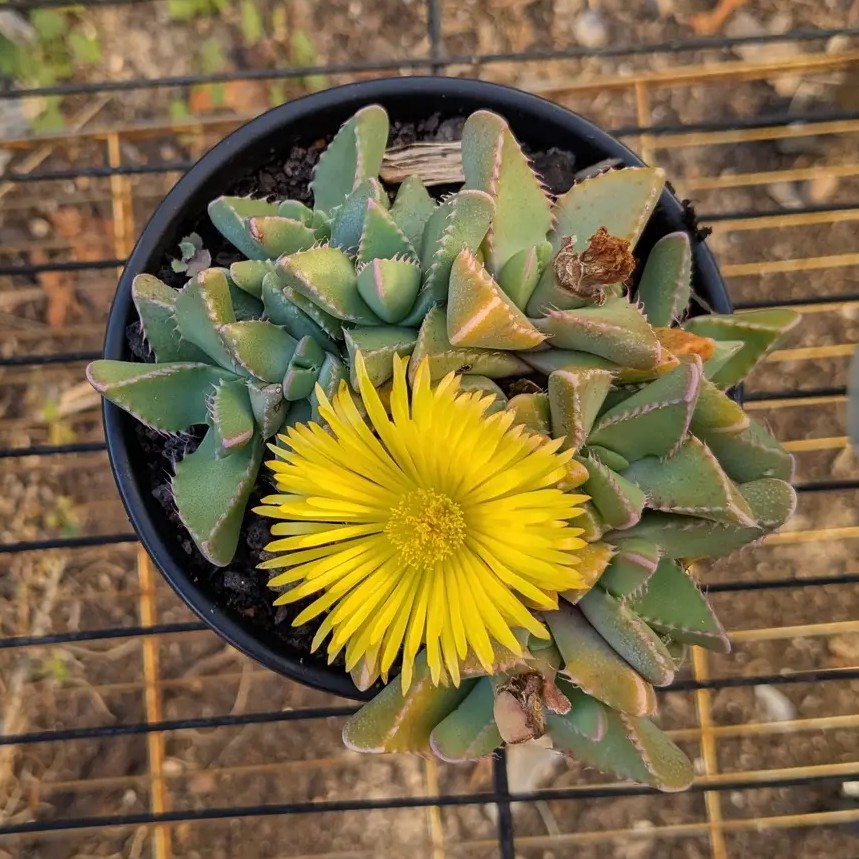
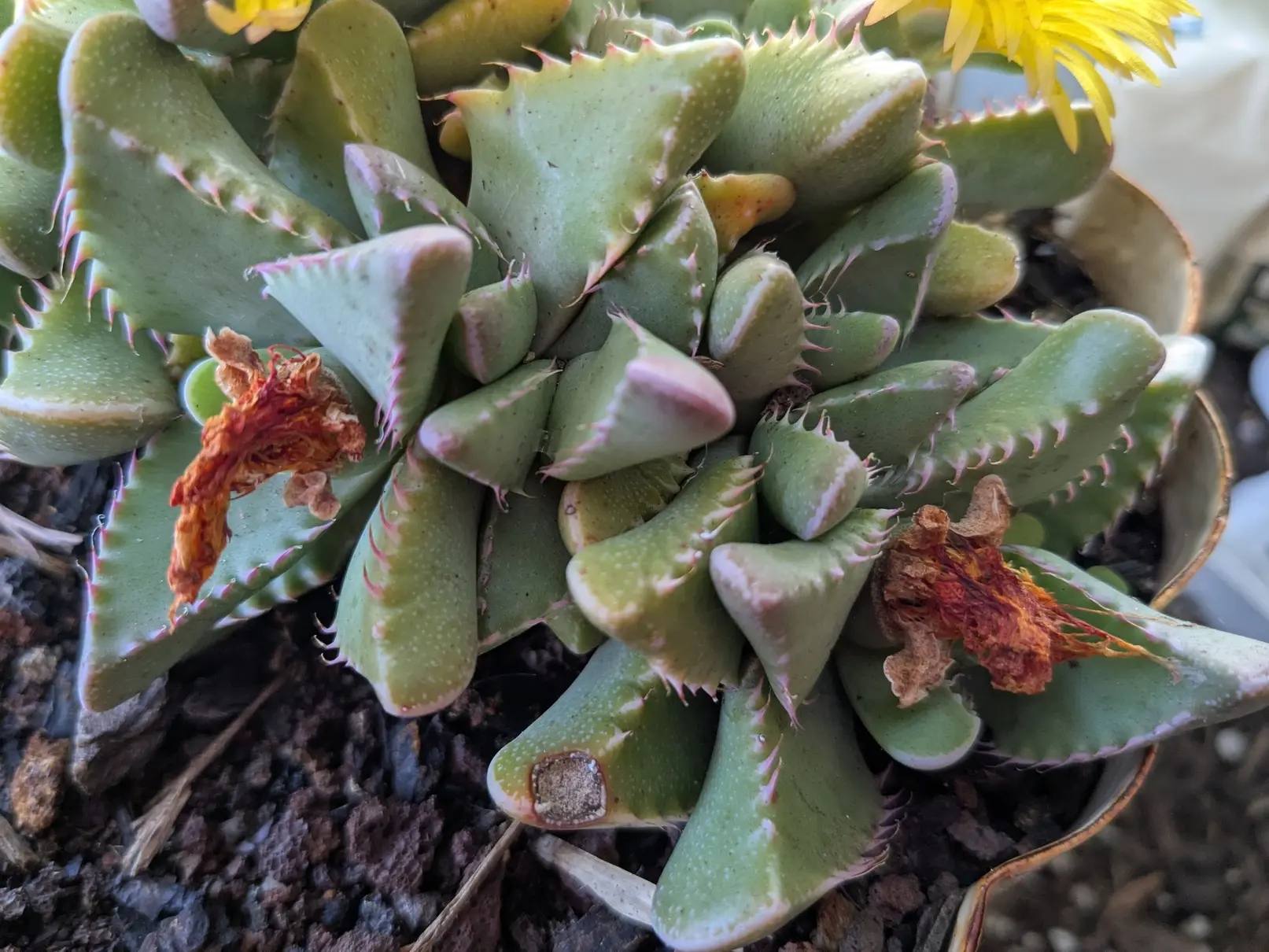
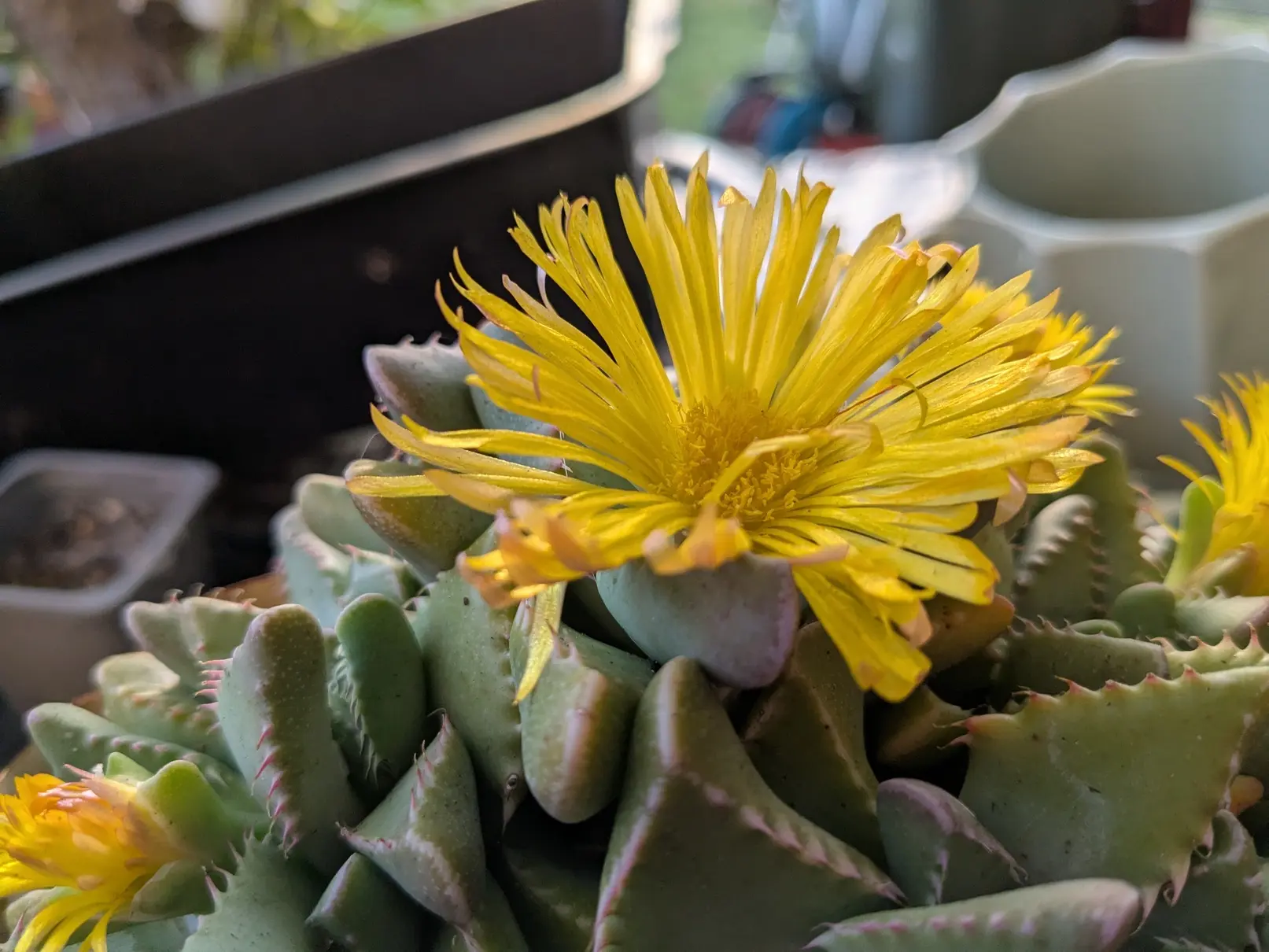
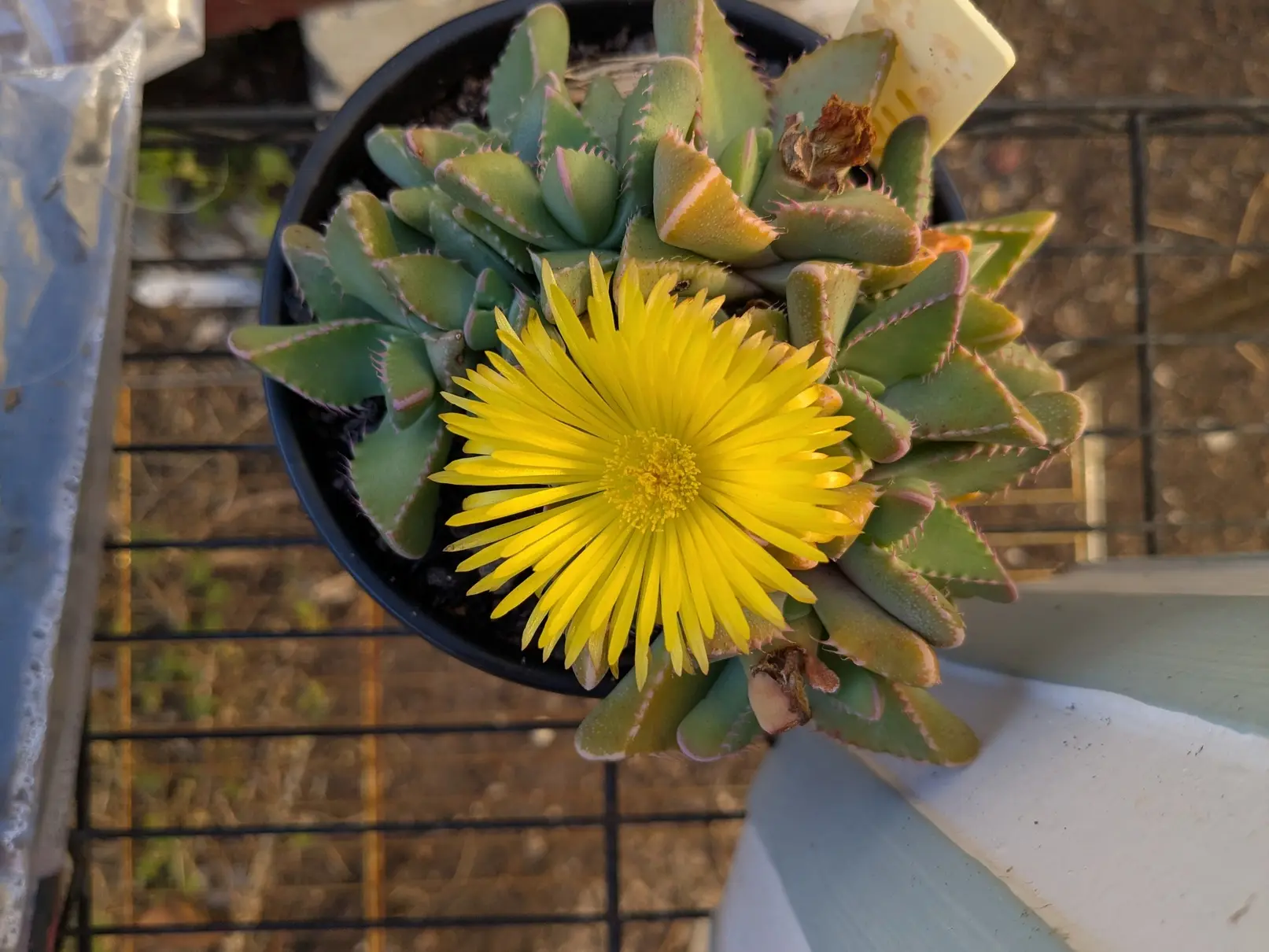
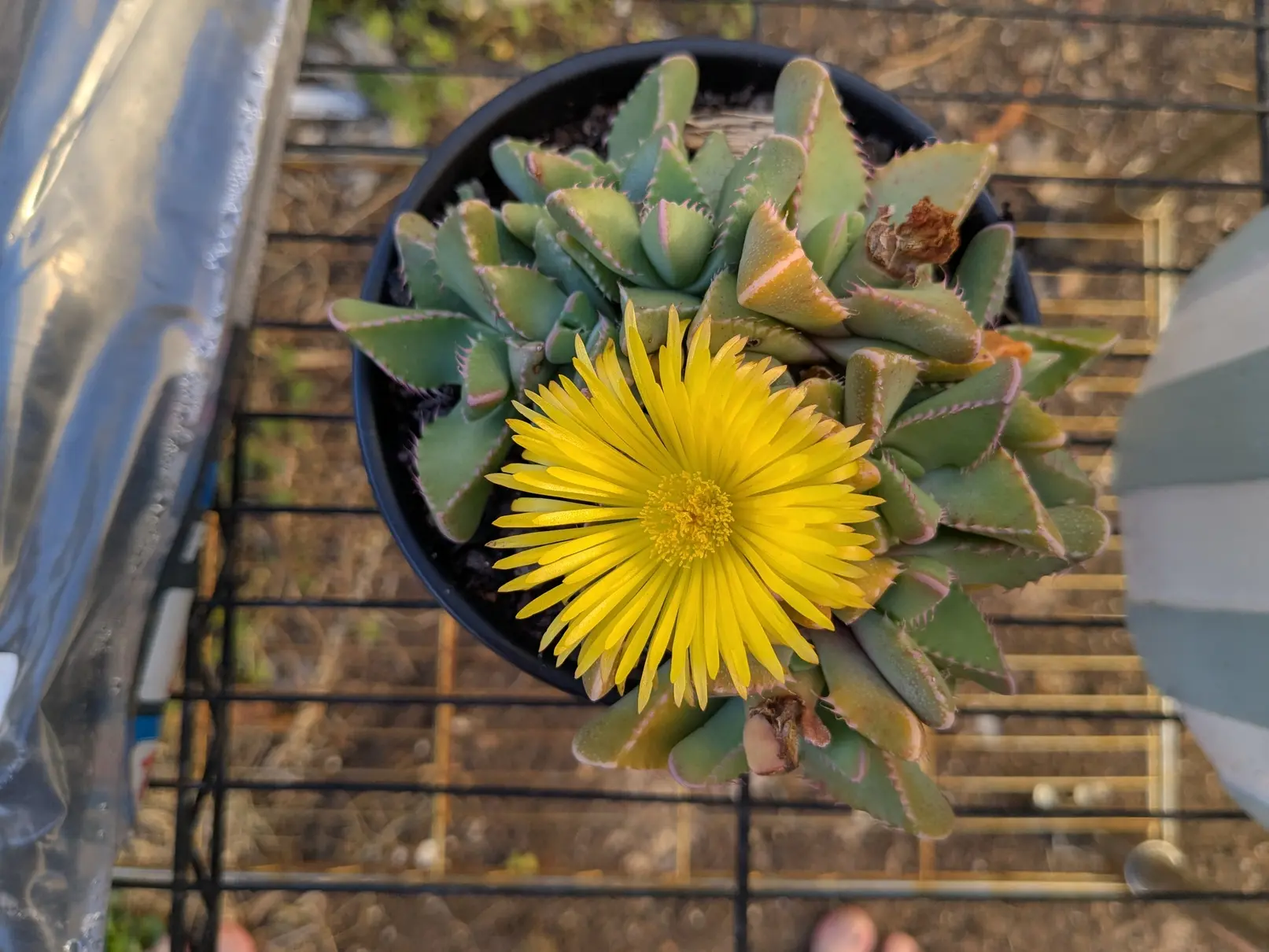
Faucaria felina – Tiger Jaws
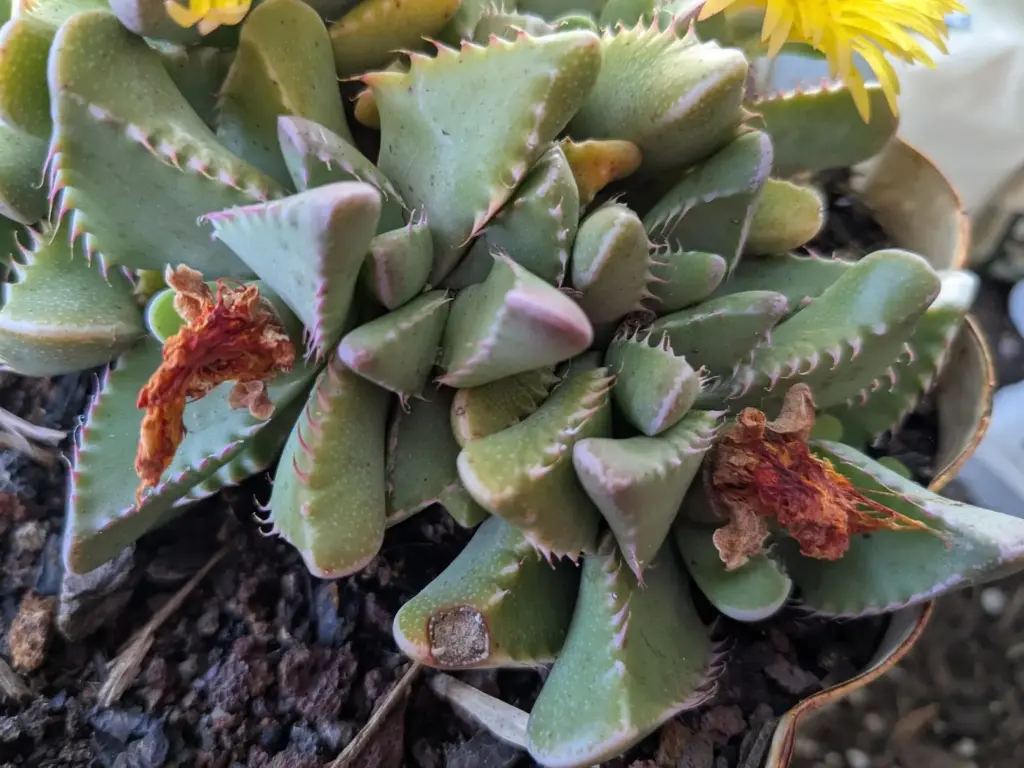
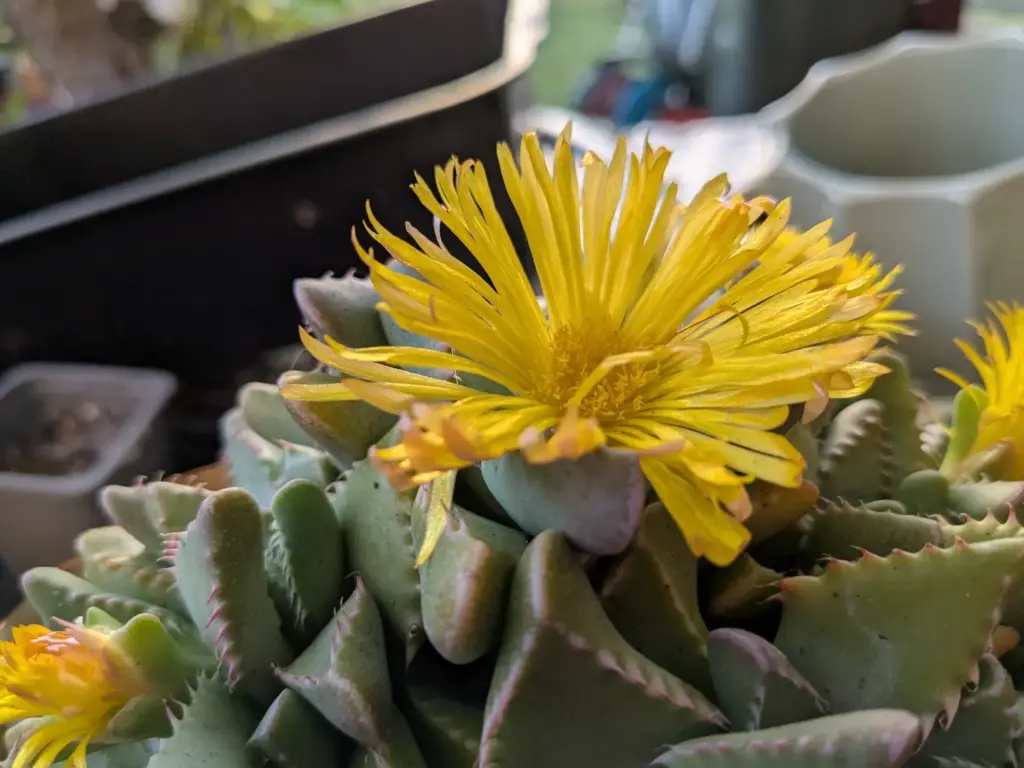
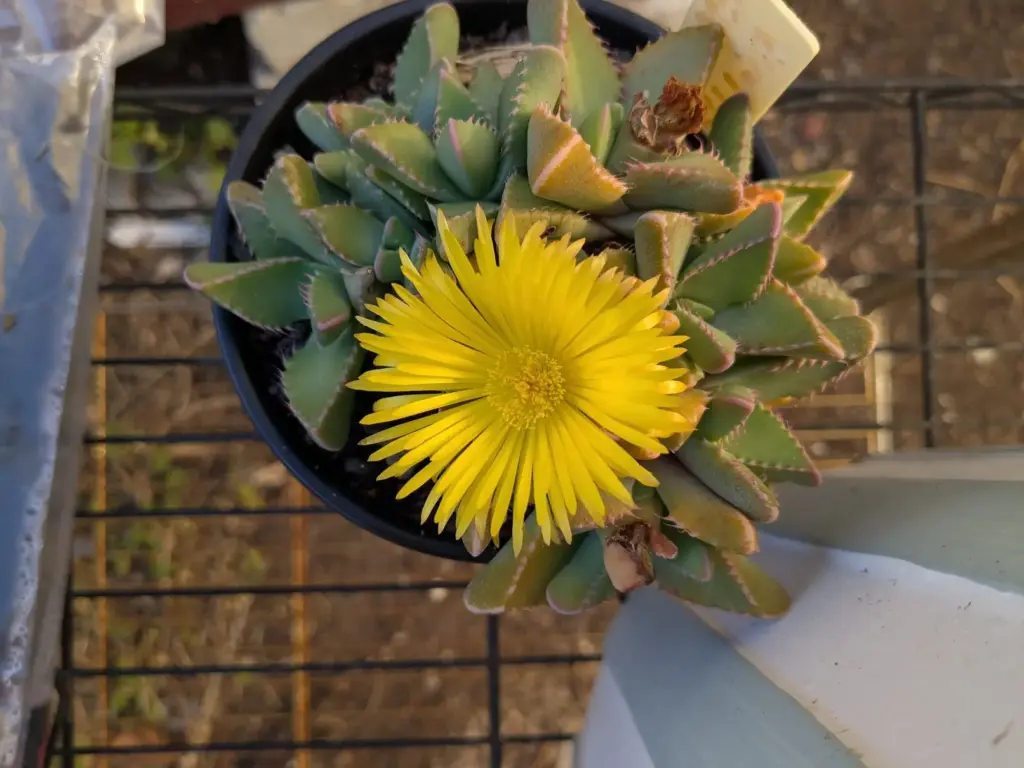
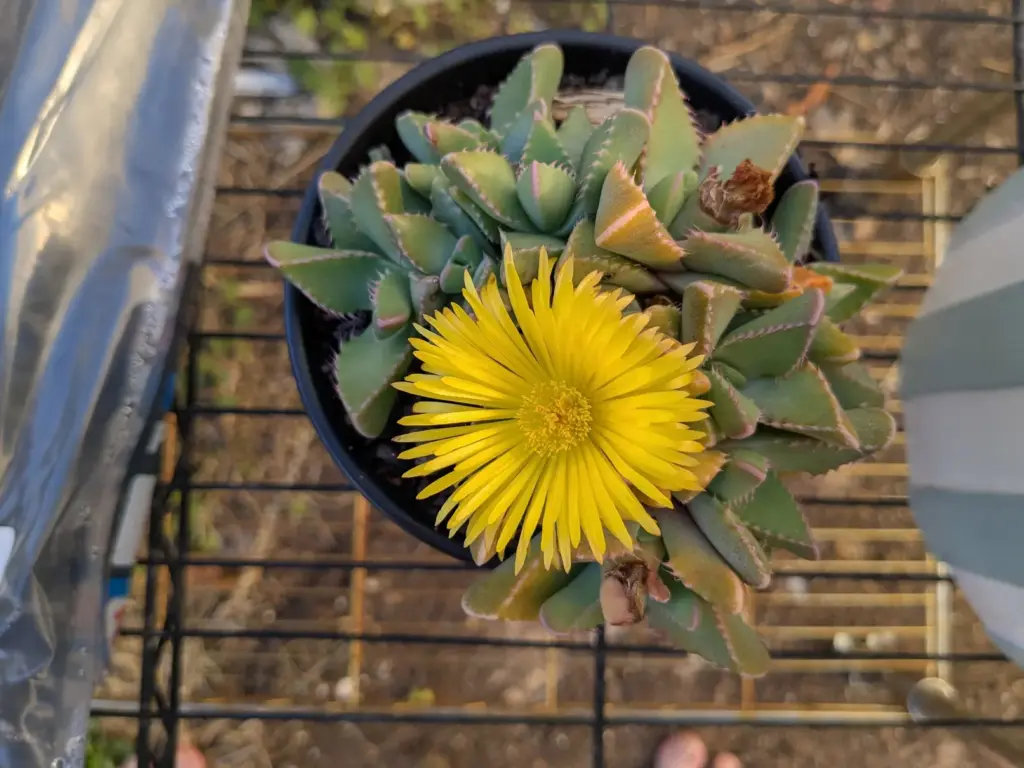
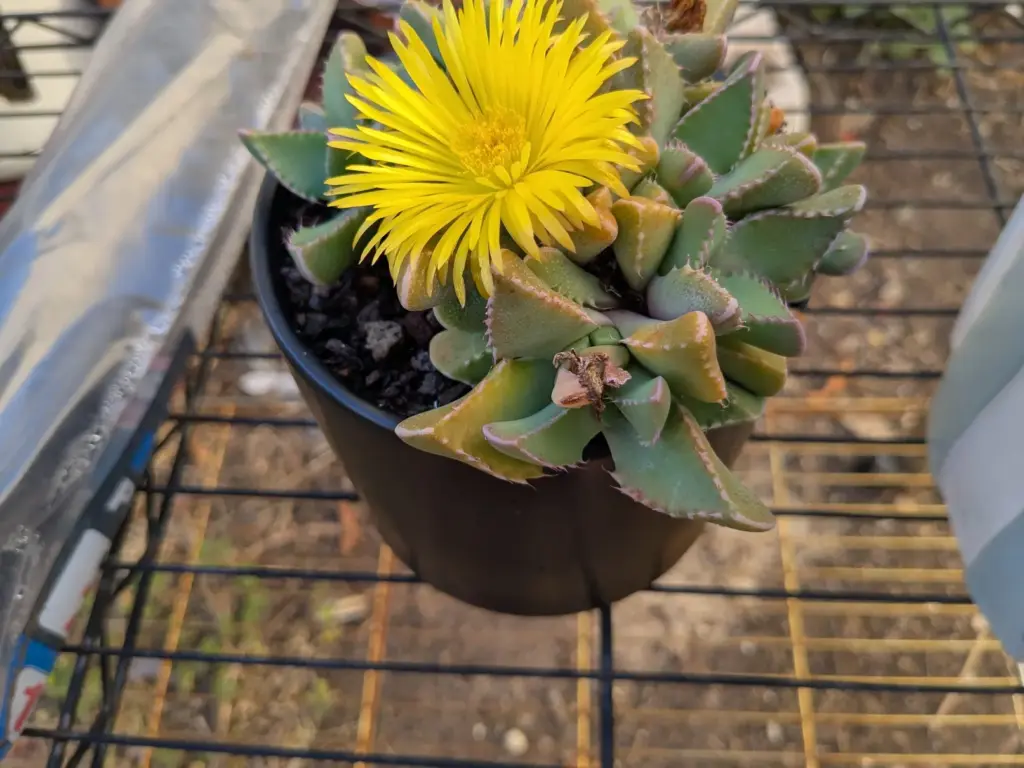
Does well outside or indoors dislikes full afternoon sun and requires really bright light if indoors hit me up on the forum if you want to do a swap.
Common Names:
Cat Chap, Tiger Jaws, Cat Jaws, Wolf-mouth MesembDescription: Faucaria felina iss a compact leaf succulent forming unusual clumps of fleshy, boat-shaped, toothed leaves
Stem Not mush to see .
Leaves: Up to 70 mm long, 5-20 mm broad, slender, spreading, rhomboidal, somewhat elongated, tapering gradually, keeled. Margins with 3-5 teeth in the upper half (rarely more or less); teeth broad, fleshy, curved, white or pink ending in papillate awns of 0,5 to 3 mm length. Faces of leaves dark green to grey-green smooth or with indistinct whitish-grey dots, wax cover thin, crystals in the outer walls in certain areas resulting in white dots.
Flowers: Daisy-like up to 5 cm in diameter.
Blooming season: Autumn into winter.
Fruit: Base broadly bell-shaped, top with the valves often raised in the centre, 10-16 mm long, 9-11 mm in diameter.
Seeds: 1,4-1,5 mm broad.